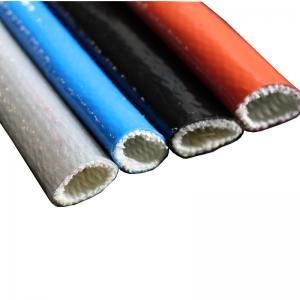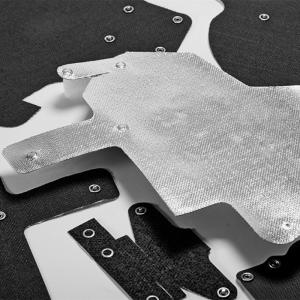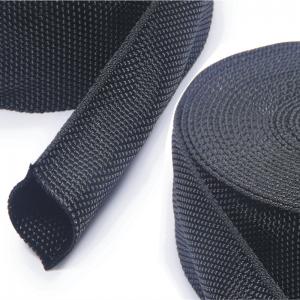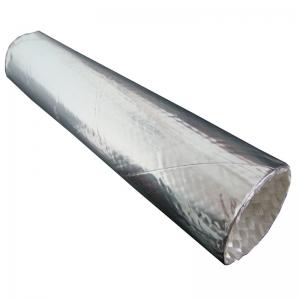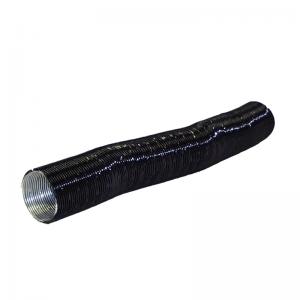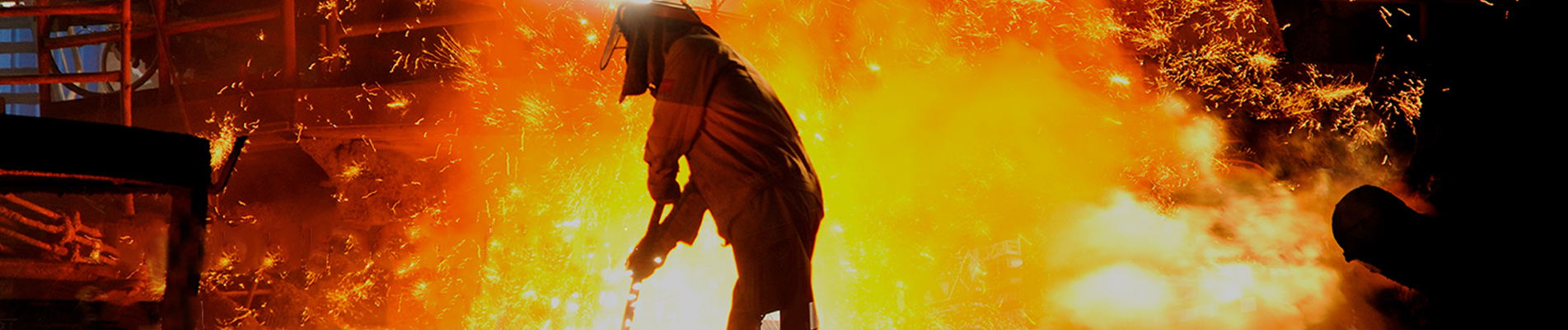
에이직물 팽창 조인트이 부품은 산업용 덕트에 설치되어 장비 또는 덕트 구간 사이의 움직임을 흡수하는 유연한 연결부입니다. 열팽창, 진동 또는 정렬 변화를 단단한 강철 구조물에 강제로 적용하는 대신, 유연한 부분이 시스템의 움직임에 따라 변형됩니다.
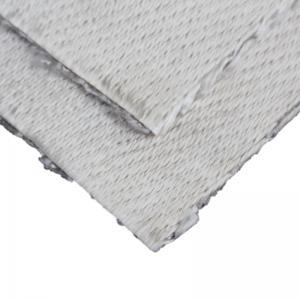
직물 신축 이음쇠는 고온 공기, 배기가스, 연도 가스 및 기타 기체 공정 매체를 운반하는 시스템에 일반적으로 사용됩니다. 이러한 신축 이음쇠의 유연한 요소는 실제 작동 조건에 따라 선택된 직조 기술 직물, 코팅 직물, 가스 밀봉 멤브레인, 보강층 및 단열재로 구성될 수 있습니다.
유연한 요소가 비금속이기 때문에 이러한 유형의 접합부는 일반적으로 다음과 같이 불립니다.비금속 팽창 조인트또는비금속 직물 팽창 조인트.
맞춤형 산업 디자인에 대해서는 다음을 참조하십시오.BSTFLEX 비금속 직물 신축 이음쇠.
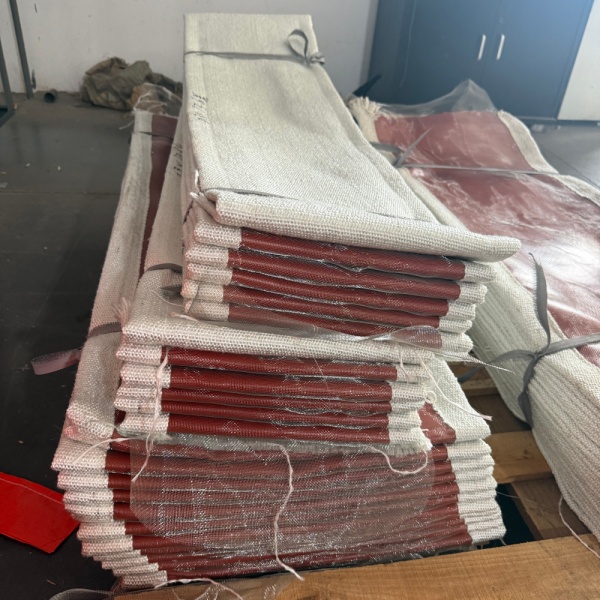
패브릭 신축 이음쇠는 덕트 시스템의 비교적 단단한 두 부분 사이에 위치하는 공학적으로 설계된 유연한 부분입니다. 이 이음쇠의 목적은 해당 부분들 사이의 필요한 연결을 유지하면서 제어된 움직임을 허용하는 것입니다.
산업용 덕트는 작동 중에 치수가 변하지 않고 유지되는 경우가 드뭅니다. 용광로, 보일러, 배기 시스템 또는 공정 덕트가 가열되면 주변 금속 구조물이 팽창하고, 냉각되면 다시 수축합니다. 팬과 회전 장비는 진동을 유발할 수 있으며, 설치 공차로 인해 인접 부품 사이에 미세한 오차가 발생할 수도 있습니다.
이러한 움직임이 단단한 덕트 시스템을 통해 직접 전달될 경우 다음과 같은 부분에 추가적인 하중이 발생할 수 있습니다.
직물 접합부는 유연한 영역을 만들어 전체 덕트 구조가 강체 조립체처럼 작동할 필요 없이 움직임의 일부가 발생할 수 있도록 합니다.
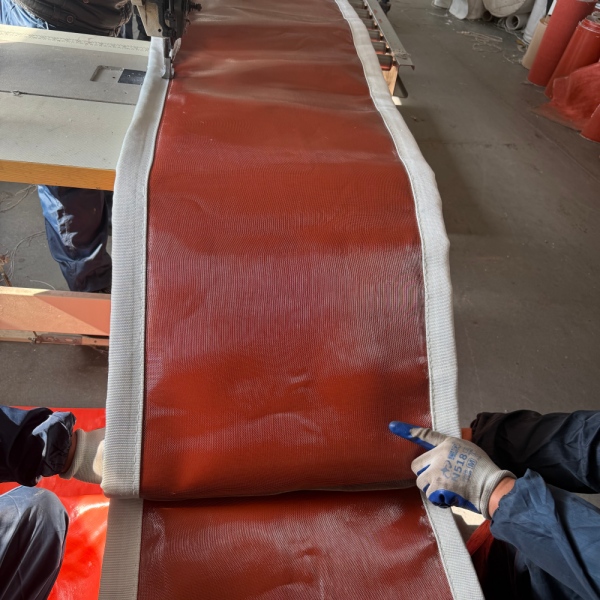
용어비금속 팽창 조인트전체 조립품의 모든 구성 요소가 아닌 유연한 요소를 설명합니다.
금속 프레임, 클램핑 바, 라이너 또는 기타 하드웨어는 여전히 접합부 주변에 사용될 수 있습니다. 그러나 주요 유연 운동을 수행하는 부분은 성형 금속 벨로우즈 대신 직물, 엘라스토머, 코팅 섬유, 적층 멤브레인 또는 이러한 재료의 조합으로 제작됩니다.
이러한 구분은 중요한데, 그 이유는 직물과 금속 팽창 이음매의 작동 방식이 다르기 때문입니다.
금속 벨로우즈는 성형된 금속 주름을 구부려 움직임을 수용합니다. 직물 신축 이음쇠는 섬유 또는 복합 소재 벨트의 유연성을 이용하여 덕트가 움직일 때 모양을 바꿉니다.
대형 산업용 덕트, 특히 비교적 낮은 압력의 기체 매체를 운반하는 덕트의 경우, 이러한 구조는 협소한 설치 공간에서 상당한 이동성을 제공할 수 있습니다.
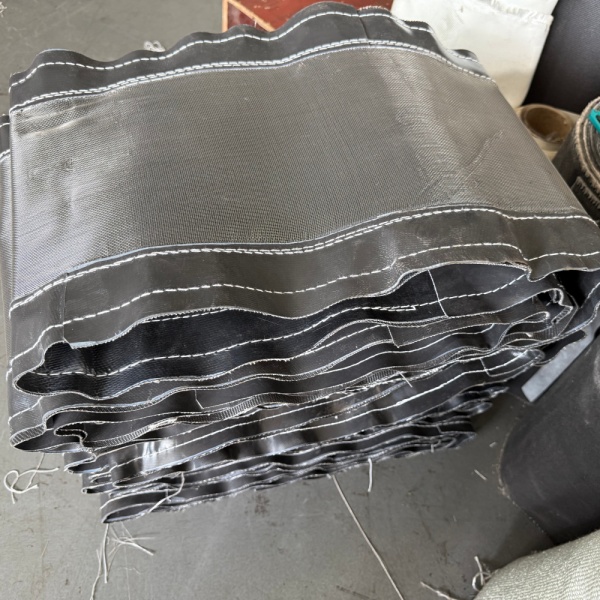
기본 작동 원리는 간단합니다.
일정한 간격으로 분리된 두 개의 뜨거운 덕트 구간을 상상해 보세요. 유연한 직물 요소가 이 간격을 연결하고 각 덕트 구간의 둘레에 단단히 고정되어 있습니다.
덕트가 가열되어 팽창하면 두 부분 사이의 거리 또는 정렬 상태가 변합니다. 강성 연결부처럼 이러한 움직임에 저항하는 대신, 유연한 벨트는 모양이 변합니다.
설계에 따라 관절은 여러 유형의 움직임에 반응할 수 있습니다.
축 방향 압축은 두 덕트 부분 사이의 거리가 중심선을 따라 짧아질 때 발생합니다.
이는 열팽창으로 인해 덕트의 한 부분이 다른 부분 쪽으로 이동할 때 자주 발생합니다. 유연한 스팬은 거리 감소에 맞춰 제어된 방식으로 압축되거나 접힙니다.
축방향 연장은 그와 반대되는 현상입니다. 연결 부분 사이의 거리가 세로축을 따라 증가합니다.
직물 요소는 과도하게 늘어나지 않고 확장될 수 있도록 충분한 여유 공간을 확보해야 합니다.
측면 이동은 한 덕트 연결부가 다른 덕트 연결부에 비해 측면으로 이동할 때 발생합니다.
이는 특히 장비의 움직임, 다른 방향으로의 열팽창 또는 설치 형상으로 인해 단순한 압축이나 팽창이 아닌 오프셋이 발생하는 대형 덕트 시스템에서 매우 중요합니다.
두 연결면이 더 이상 평행하지 않을 때 각도 운동이 발생합니다.
이 유연한 벨트는 둘레를 따라 불균등하게 변형되어 한쪽은 압축되는 반면 다른 부분은 늘어납니다.
실제 산업 시스템은 항상 한 방향으로만 움직이는 것은 아닙니다. 축 방향, 횡 방향 및 각도 변위가 동시에 발생할 수 있습니다.
이것이 바로 한 가지 이유입니다.직물 덕트 팽창 조인트특히 복잡한 덕트 구조에서 유용합니다. 모든 변위를 개별적으로 처리하는 대신 예상되는 움직임 조합을 중심으로 연결부 형상을 설계할 수 있습니다.
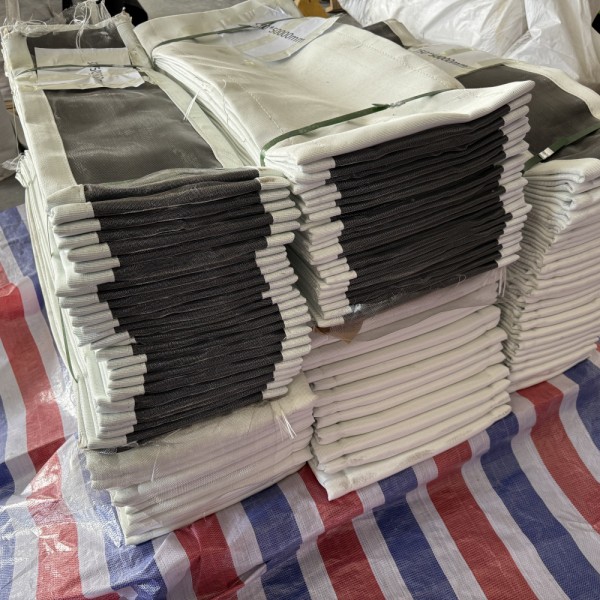
열팽창은 팽창 조인트를 설치하는 가장 잘 알려진 이유이지만, 유일한 이유는 아닙니다.
전체 이동 요구 사항은 여러 작동 조건에서 발생할 수 있습니다.
| 원인 | 시스템에서 무슨 일이 일어나는가 | 팽창 조인트의 역할 |
|---|---|---|
| 열팽창 | 금속 덕트는 온도가 상승함에 따라 팽창합니다. | 제어된 차원 이동을 가능하게 합니다 |
| 열수축 | 가동 중단 또는 냉방 중 덕트 계약 | Allows the system to return toward its cold position |
| Fan Vibration | Mechanical vibration is transferred from rotating equipment | Provides a flexible connection between equipment and ducting |
| Misalignment | Connecting duct faces may not be perfectly aligned | Can accommodate specified offsets within the joint design |
| Structural Movement | Supports or equipment may move relative to each other | Provides a controlled flexible section |
| Operating Cycles | Repeated heating and cooling creates cyclic movement | Accommodates repeated dimensional changes when correctly designed |
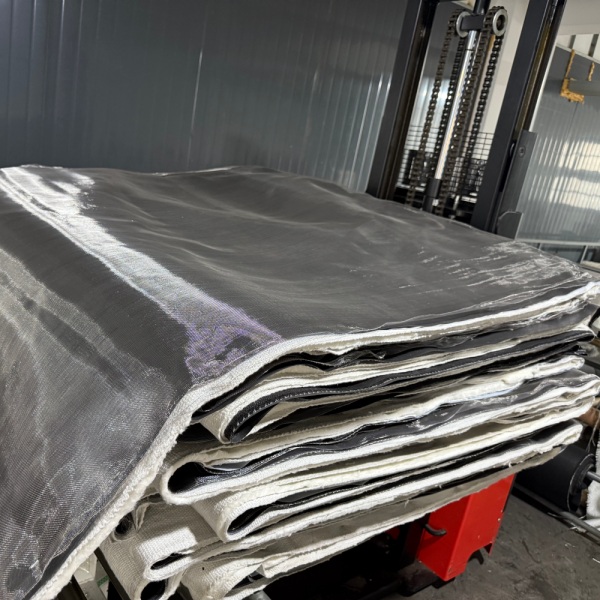
A fabric expansion joint should not be viewed simply as a piece of cloth connecting two ducts.
The flexible section is an engineered material system. Depending on service conditions, it may use a single flexible layer or several different layers, each selected for a specific function.
The outer layer forms part of the flexible envelope and may also provide resistance to weathering, environmental exposure or external mechanical conditions.
This layer helps contain the process gas. Its material must be compatible with the expected temperature, gas composition, moisture and chemical exposure.
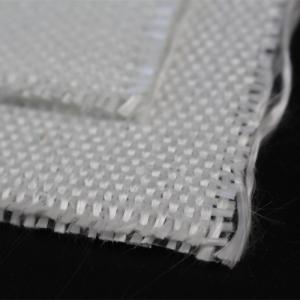
Reinforcement provides mechanical support and dimensional stability to the flexible element. Fiberglass and other technical textile constructions are commonly considered depending on temperature and mechanical requirements.
High gas temperature does not necessarily mean every layer of an expansion joint should be exposed directly to that temperature.
An insulation package can reduce heat transfer from the process side toward temperature-sensitive sealing or outer layers.
Hot gas velocity, ash, dust or abrasive particles can damage an unprotected flexible surface. Some systems therefore require an internal liner, baffle or other protection to shield the joint from direct gas flow and particulate impact.
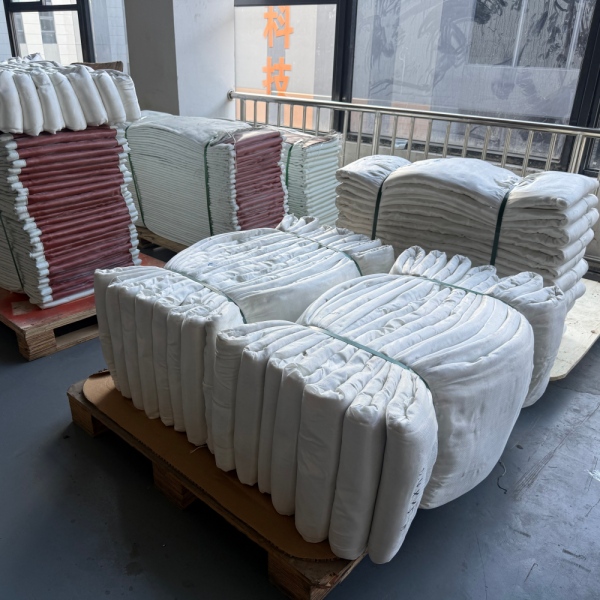
One material rarely provides every property required by a severe industrial application.
For example, a material with excellent temperature resistance may not provide the best gas sealing. A highly flexible sealing material may require reinforcement. A chemically resistant membrane may need insulation to keep its operating temperature within an acceptable range.
As a result, manyfabric expansion jointsuse a combination of materials rather than one fabric performing every function.
Typical material families include:
BSTFLEX also manufactures a broad range ofhigh temperature fabrics, allowing material construction to be evaluated according to thermal, chemical and mechanical requirements.
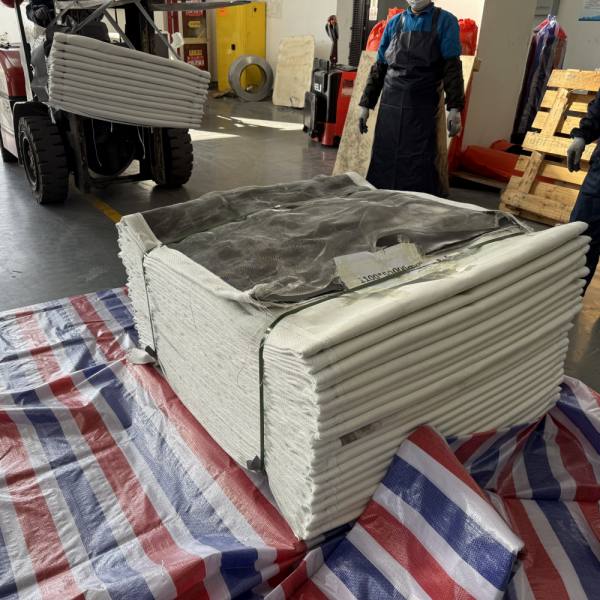
Fabric joints are mainly associated with industrial gas-handling and ducting systems rather than conventional high-pressure liquid piping.
Typical applications include the following.
Boilers, furnaces and combustion equipment can generate hot flue gases that must travel through large duct networks. These ducts experience significant dimensional change between ambient and operating temperatures.
Exhaust ducts connected to engines, industrial furnaces, thermal processing equipment or pollution-control systems may require movement compensation between hot equipment and downstream ducting.
Power plants use large gas-handling systems around boilers, fans, air-handling equipment and emission-control installations. Thermal growth and vibration can occur at multiple connection points.
Cement production combines heat, large duct dimensions, dust and continuous process operation. Flexible expansion sections may be required around kiln-related systems, fans and process ducts.
High-temperature furnaces, hot-air systems and exhaust ducts in steel and metal-processing plants can generate significant thermal movement.
Placing a flexible connection between rotating equipment and rigid ducting can help prevent all equipment movement from being transmitted directly into the surrounding duct structure.
Large ducting systems used with filtration, scrubber, flue-gas treatment and other air-pollution-control equipment often need flexible connections between process components.
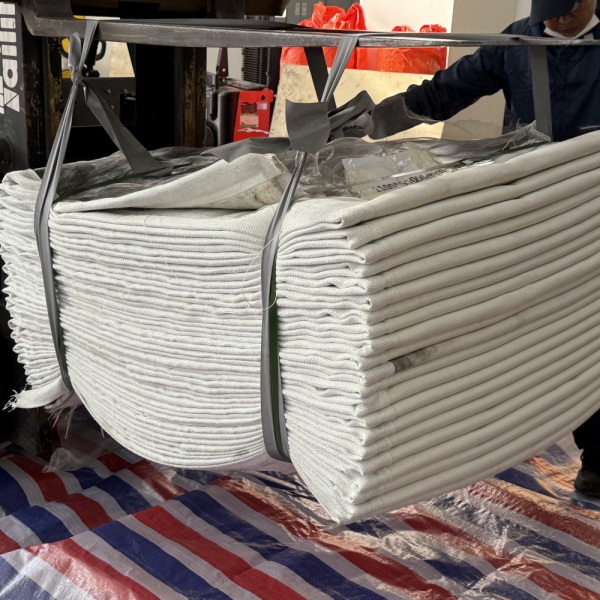
Both products are intended to manage movement, but they should not be considered interchangeable simply because they share the term “expansion joint.”
| Characteristic | Fabric Expansion Joint | Metallic Bellows |
|---|---|---|
| Flexible Element | Fabric, coated textile or composite membrane | Formed metal bellows |
| Common Application | Large industrial ducts and gaseous-media systems | Industrial piping and engineered duct or process systems |
| Movement Method | Flexible belt changes geometry | Metal convolutions flex |
| Large Duct Sizes | Well suited to custom large cross-sections | Requires application-specific metallic design |
| Multidirectional Movement | Can accommodate several movement directions in one flexible section | Depends on bellows geometry and assembly design |
| Material System | Can combine several fabric, coating and insulation layers | Primarily determined by metallic alloy and bellows construction |
Pressure, temperature, process medium, movement, duct size and system design must all be considered before deciding which expansion joint technology is appropriate.
A flexible joint can help isolate vibration between connected components because its flexible element does not behave like a completely rigid metal duct section.
This is useful near fans, blowers and other equipment that produces mechanical vibration.
However, vibration should still be treated as an engineering input. Frequency, amplitude, equipment arrangement and joint geometry all influence performance. A fabric expansion joint should not be selected only because a system is described as “vibrating.”
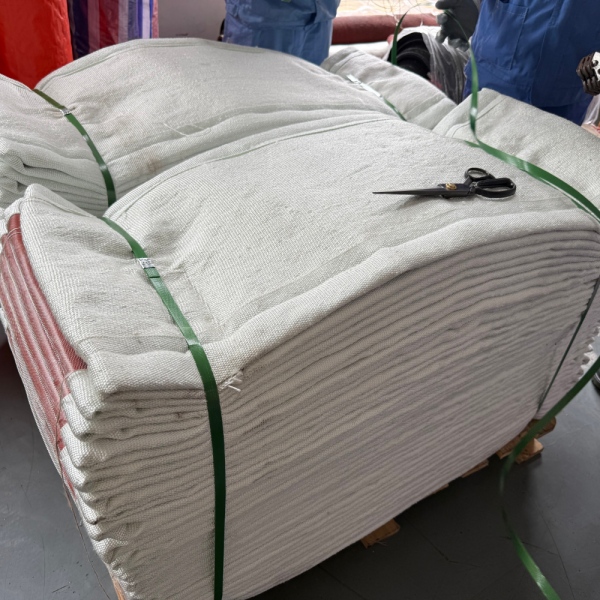
There is no universal movement value that applies to every fabric expansion joint.
Movement capability depends on:
For this reason, axial, lateral and angular movements should be stated separately when specifying a custom expansion joint.
A request such as “50 mm total movement” is less useful than specifying how that movement occurs.
For example:
These values are examples of how movement information can be communicated, not standard ratings for every joint.
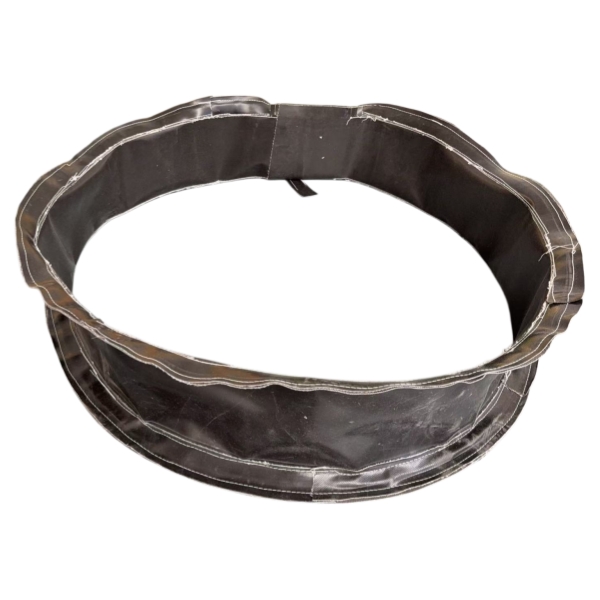
There is also no single temperature rating that defines all fabric expansion joints.
The allowable process temperature depends on the complete construction.
A high-temperature joint may be designed so that the process-side protection and insulation reduce the temperature reaching the gas-sealing membrane and external flexible layers.
Temperature selection should therefore consider:
This is why specifying only “high temperature fabric expansion joint” is insufficient for engineering selection.
A manufacturer needs more than the nominal duct dimensions to select a reliable construction.
The most useful project information includes:
| Design Information | Typical Details Required |
|---|---|
| Duct Geometry | Round, rectangular, square or special shape |
| Dimensions | Diameter or width and height |
| Face-to-Face Length | Available installation distance |
| Temperature | Normal and maximum process temperature |
| Pressure | Positive or negative operating and design pressure |
| Process Medium | Hot air, flue gas, exhaust gas or other process gas |
| Axial Movement | Compression and extension |
| Lateral Movement | Required transverse offset |
| Angular Movement | Required angular displacement |
| Chemical Conditions | Acidic, alkaline, moisture or other process exposure |
| Particulate Loading | Dust, ash or abrasive particles |
| Installation Environment | Indoor, outdoor, weather exposure or confined area |
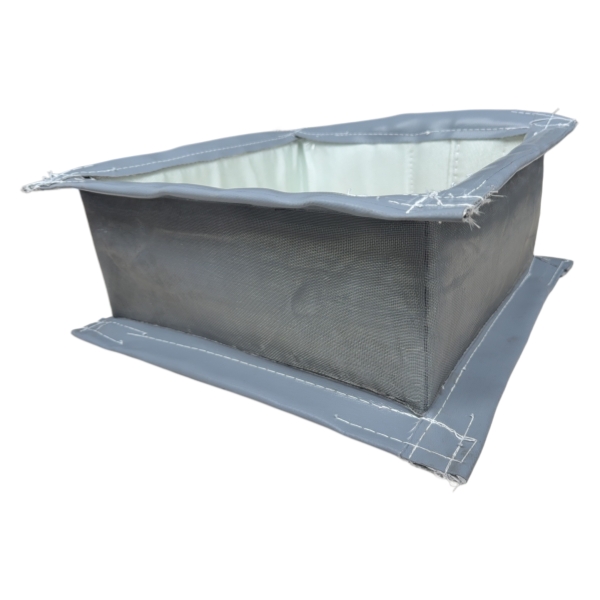
Anon metallic expansion jointshould be considered when an industrial ducting system needs flexibility and the operating conditions are suitable for a fabric-based construction.
Typical reasons include:
The final decision should always be based on actual system conditions rather than the product name alone.
Some basic constructions can be standardized, but industrialfabric expansion jointsare frequently customized.
Two ducts with the same dimensions may require completely different expansion joints if they operate at different temperatures, carry different gases or experience different movements.
Important differences may include:
This is why drawings and operating data are particularly valuable when sourcing replacement or OEM fabric expansion joints.
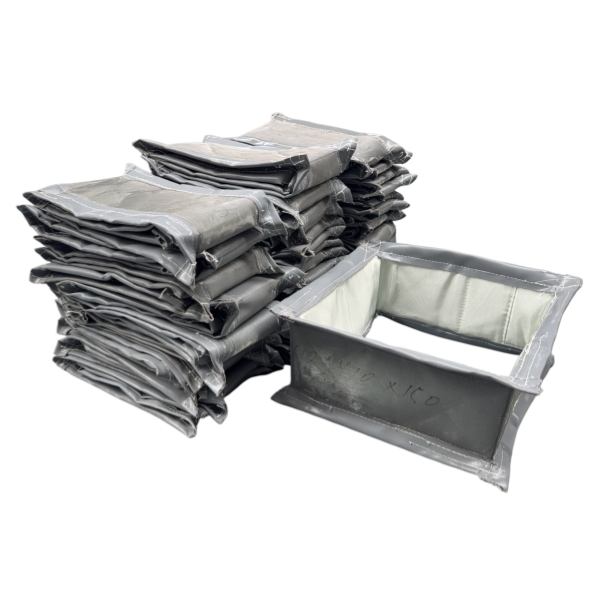
Rectangular joints are widely used on large industrial duct systems. Their corner sections require careful design because the flexible element does not deform identically along straight sides and corners.
Round joints are used on circular ducting, fan connections and exhaust systems. The circumference provides a continuous attachment surface around the duct.
Square configurations are similar in principle to rectangular designs but may be required by specific duct or equipment layouts.
Transitions, non-standard dimensions and application-specific geometries can be manufactured when existing industrial equipment cannot accept a standard shape.
Expansion joint service life depends heavily on correct specification and installation.
Potential failure mechanisms include:
A damaged joint should therefore not automatically be replaced with an identical copy without understanding why the original unit failed.
For replacement projects, operating history can be as valuable as dimensional information.
In industrial ducting, the terms are often used for closely related products. A fabric expansion joint uses a flexible non-metallic fabric or composite element, so it falls within the broader non-metallic expansion joint category. The exact terminology varies by industry and construction.
It provides a flexible connection between sections of industrial ductwork so thermal expansion, contraction, lateral displacement, angular movement, vibration and specified misalignment can be accommodated without making the connection completely rigid.
Typical locations include industrial exhaust ducts, flue-gas systems, furnace and boiler ductwork, fan connections, cement plants, power-generation equipment, steel-processing facilities and air-pollution-control systems.
Yes. Depending on the design, they can accommodate axial compression, axial extension, lateral movement, angular movement and combinations of these movements.
No. Fiberglass is an important reinforcement and high-temperature textile, but complete expansion joints may combine coated fiberglass, PTFE-coated fabric, silicone-coated textiles, silica fabrics, insulation and other materials according to operating conditions.
예, 전체 소재 시스템이 실제 공정 온도 및 가스 조건에 맞게 설계된 경우 가능합니다. 고온 환경에서는 여러 기능층이 필요하며, 뜨거운 가스 흐름과 유연한 밀봉 요소 사이에 적절한 보호 장치가 있어야 하는 경우가 많습니다.
자동으로 변경되는 것은 아닙니다. 직물 및 금속 신축 이음쇠는 압력, 움직임, 온도 및 기계적 특성이 다릅니다. 신축 이음쇠 종류를 변경하기 전에 시스템 조건을 평가해야 합니다.
덕트 폭과 높이 또는 직경, 면간 길이, 플랜지 치수, 볼트 배열, 연결부 형상 및 사용 가능한 설치 공간과 같은 정보가 유용합니다. 작동 온도, 압력, 매체 및 움직임 요구 사항 또한 필수적입니다.
BSTFLEX는 개발합니다직물 팽창 조인트산업용 덕트, 배기, 온풍 및 연도 가스 분야에 사용됩니다. 원형, 직사각형, 정사각형 및 비표준 덕트 형상에 맞게 제작할 수 있으며, 재질 시스템은 온도, 압력, 공정 매체, 움직임 및 설치 조건에 따라 선택됩니다.
새로운 시스템을 개발하거나 기존 연결부를 교체하는 경우 다음 사항을 검토하십시오.BSTFLEX 비금속 직물 신축 이음쇠제품 페이지에서 이용 가능한 시공 및 맞춤 제작 옵션을 확인하세요.
엔지니어링 평가를 위해 덕트 치수, 정상 및 최대 온도, 작동 압력, 처리 매체, 축 방향 변위, 횡 방향 변위, 설치 길이, 수량 및 관련 도면을 보내주십시오.

 English
 français
 Deutsch
 русский
 italiano
 español
 português
 Nederlands
 العربية
 日本語
日本語 Türkçe
 Polski
 Tiếng Việt
 slovenský
 Indonesia