다음 중 하나를 선택하세요직물 팽창 조인트그리고금속 팽창 조인트단순히 어떤 제품이 더 강한지, 어떤 재료가 가장 높은 온도를 견딜 수 있는지의 문제가 아닙니다. 올바른 선택은 시스템의 작동 방식, 작동 압력, 시스템을 통과하는 매체, 덕트 또는 파이프의 크기, 그리고 연결된 장비에 전달될 수 있는 부하량에 따라 달라집니다.
일반적으로 직물 신축 이음쇠는 뜨거운 공기, 배기가스 또는 연도 가스를 운반하는 대형 저압 덕트 시스템에서 매우 효과적이며, 금속 벨로우즈는 압력 유지 및 기계적 강도가 중요한 가압 배관 및 공정 시스템에 일반적으로 사용됩니다.
다음 비교는 각 설계가 어떤 부분에서 가장 우수한 성능을 발휘하는지, 그리고 신축 이음매를 지정하기 전에 어떤 요소를 평가해야 하는지를 설명합니다.
빠른 결정:
선택하세요직물 팽창 조인트대형 덕트, 저압, 상당한 횡방향 또는 복합적인 움직임, 진동, 고온 가스 또는 제한된 허용 반력 하중이 관련된 응용 분야.
선택하세요금속 팽창 조인트가압 배관, 증기, 액체, 높은 기계적 하중 또는 금속 벨로우즈를 중심으로 특별히 설계된 시스템과 관련된 응용 분야입니다.
| 선택 요인 | 직물 신축 이음매 | 금속 신축 이음쇠 |
|---|---|---|
| 일반적인 서비스 | 산업용 덕트 및 기체 매체 | 배관, 용기 및 엔지니어링 공정 시스템 |
| 압력 용량 | 주로 저압 응용 분야에 사용됩니다. | 훨씬 더 높은 압력에 견딜 수 있도록 설계할 수 있습니다. |
| 대형 덕트 크기 | 매우 적합함 | 가능하지만, 일반적으로 기계적으로 더 복잡합니다. |
| 축 운동 | 제대로 설계하면 훌륭한 성능을 발휘합니다. | 적절한 벨로우즈 형상을 갖추면 탁월한 성능을 발휘합니다. |
| 측면 이동 | 컴팩트한 구조에서 뛰어난 기동성 제공 | 일반적으로 적절한 벨로우즈 구성이 필요합니다. |
| 각도 운동 | 복합적인 움직임을 수용할 수 있습니다. | 맞춤형 구성으로 제공됩니다. |
| 진동 차단 | 매우 뛰어난 유연성 | 애플리케이션에 따라 다릅니다. |
| 스프링 포스 | 일반적으로 낮음 | 벨로우즈는 측정 가능한 스프링 힘을 발생시킵니다. |
| 재료 시스템 | 복합 섬유, 멤브레인 및 단열재 | 금속 합금 벨로우즈 |
| 공통 미디어 | 뜨거운 공기, 배기가스, 연도가스, 공정가스 | 증기, 액체, 기체 및 공정 유체 |
| 일반적인 기하학적 형태 | 원형, 직사각형 및 대형 맞춤형 모양 | 주로 원형이며, 직사각형 디자인도 제공됩니다. |
선택 과정을 시작하는 가장 쉬운 방법 중 하나는 신축 이음쇠가 대형 산업용 덕트에 설치되는지 아니면 가압 배관 시스템에 설치되는지를 확인하는 것입니다.
에이비금속 직물 팽창 조인트특히 대형 공기 및 가스 덕트에 매우 적합합니다. 이러한 시스템은 발전소, 시멘트 공장, 제철소, 산업용 용광로, 집진 시스템, 연소 장비 및 배기 설비에서 흔히 볼 수 있습니다.
공정 매체는 일반적으로 기체이며, 압력은 가압식 공정 배관에 비해 상대적으로 낮은 경우가 많습니다.
금속 팽창 이음쇠는 얇은 금속 주름을 성형하여 유연성을 확보하면서 압력을 유지합니다. 금속 벨로우즈는 증기, 공정 배관, 석유화학, 화학 및 기타 엔지니어링 시스템에서 압력이 주요 설계 요구 사항인 경우에 널리 사용됩니다.
이러한 적용 환경의 차이가 두 기술 간의 성능 차이를 설명하는 주요 요인입니다.
압력은 직물 신축 이음매와 금속 벨로우즈를 구분하는 첫 번째 요소인 경우가 많습니다.
패브릭 이음매는 주로 저압 덕트용으로 설계되었습니다. 이음매의 유연한 요소는 압력을 견디는 금속 벨로우즈 대신 코팅된 직물, 보강층, 밀봉막 및 단열재로 구성됩니다.
이들은 일반적으로 다음과 같은 곳에서 발견됩니다:
금속 벨로우즈는 훨씬 더 높은 내부 압력을 견딜 수 있도록 설계될 수 있습니다. 복잡한 금속 벽은 유연성과 압력 차단 기능을 모두 제공하도록 설계되었습니다.
이러한 특성으로 인해 금속 팽창 조인트는 다음과 같은 용도에 적합합니다.
선택 규칙:시스템 내 상당한 압력을 견뎌야 하는 경우, 일반적으로 금속 벨로우즈를 먼저 검토해야 합니다. 패브릭 신축 이음쇠는 내압 등급이 있는 금속 벨로우즈를 직접 대체하는 용도로 사용해서는 안 됩니다.
움직임이 있을 때 직물 디자인이 특히 매력적으로 드러납니다.
직물 벨트는 비교적 넓은 영역에 걸쳐 변형될 수 있습니다. 따라서 여러 개의 금속 주름을 사용하지 않고도 상당한 축 방향, 측면 방향 및 각도 변위를 수용할 수 있습니다.
열팽창이 여러 방향으로 발생하는 대형 덕트 시스템의 경우, 이는 팽창 조인트 구조를 상당히 단순화할 수 있습니다.
금속 벨로우즈도 이러한 움직임을 수용할 수 있지만, 벨로우즈 구조는 이러한 움직임에 맞춰 특별히 설계되어야 합니다.
For example, larger lateral displacement may require a universal metallic expansion joint with multiple bellows and a center pipe rather than a single bellows element.
Therefore, when large lateral or combined movement is required in a low-pressure duct, afabric expansion jointis often the more practical design.
This is an important engineering difference that is often overlooked during purchasing.
A metallic bellows behaves like a mechanical spring. When it is compressed, extended or laterally displaced, it generates reaction forces that must be considered in the piping design.
These forces may influence:
Fabric expansion joints generally produce much lower spring forces because the flexible textile element is considerably softer than formed metal bellows.
For large duct systems connected to fans, furnaces or lightweight structural components, reducing these reaction loads can be a major advantage.
Fans, blowers, turbines and other rotating equipment can transmit vibration into connected ductwork.
A flexible fabric connector can help isolate some of this vibration because the textile belt does not create the same rigid mechanical path as solid ductwork.
This makes fabric expansion joints especially useful around:
Metal expansion joints can also accommodate vibration, but the movement amplitude, frequency and expected cycle life must be considered carefully in the bellows design.
For high-cycle vibration, neither product should be selected solely from a general product specification. Actual vibration data should be supplied to the manufacturer.
Large rectangular ductwork strongly favors fabric construction in many industrial systems.
Consider an exhaust duct measuring several meters across. Producing a metallic flexible element for such a large cross-section requires substantial metal fabrication and careful control of corner stresses.
A rectangular fabric joint can use a flexible belt installed around the perimeter of the duct, making very large dimensions more practical.
This is whyrectangular fabric expansion jointsare frequently seen in:
For these applications, size alone can significantly influence the final choice.
It is incorrect to assume that metal is always better at high temperature or that fabric automatically has a lower usable process temperature.
The two systems manage temperature differently.
Metallic bellows temperature capability is determined primarily by the selected alloy, design pressure, material strength at temperature and expected fatigue life.
Stainless steels and nickel-based alloys can be selected for elevated-temperature service.
A high-temperature fabric expansion joint may use several thermal layers rather than exposing one flexible membrane directly to the process gas.
A typical construction may include:
The insulation package can reduce the temperature reaching the external sealing materials.
Therefore, ahigh temperature fabric expansion jointshould be selected based on the full temperature gradient through the joint, not simply on the temperature rating of one fabric.
Hot flue gas and exhaust systems are among the most common applications for non-metallic designs.
These installations often combine:
That combination closely matches the strengths of fabric expansion joints.
Typical installations include:
For customized designs, BSTFLEX manufacturesNon Metallic Fabric Expansion Jointsfor industrial ducting, hot-air, flue-gas and exhaust applications.
Corrosion resistance cannot be judged simply by comparing “fabric” with “metal.”
The actual materials must be compared.
A metallic expansion joint may use corrosion-resistant stainless steel or nickel alloy when aggressive media are present.
A fabric expansion joint may use chemical-resistant barrier layers such as PTFE-coated textiles or other compatible membrane systems.
Selection should consider:
Condensation is particularly important in flue-gas systems because chemical attack may become more severe when corrosive gases condense on cooler joint surfaces.
Neither fabric nor metallic bellows should necessarily be exposed directly to severe turbulent flow or abrasive particles without protection.
A fabric joint may use:
A metallic bellows may also require an internal liner to prevent erosion, turbulent excitation or direct impingement on the convolutions.
This means gas velocity, dust loading and flow direction should always be included in the expansion joint specification.
Available space can strongly affect the decision.
A fabric joint can often absorb considerable lateral movement within a relatively short flexible span.
Metallic systems can also accommodate large displacement, but may require more complex arrangements such as universal joints, hinged joints or gimbal configurations depending on movement direction.
However, there are also piping layouts where a compact metallic bellows is the more appropriate design.
Installation space should therefore be considered together with pressure and movement rather than as an isolated factor.
Fabric flexible elements are generally lighter than comparable large metallic assemblies.
This difference becomes increasingly important as duct dimensions increase.
Lower component weight can reduce loads during:
In very large rectangular duct systems, this can be an important practical advantage.
Fabric expansion joints are often designed with replaceable flexible belts.
If the surrounding steel frames remain serviceable, maintenance may involve replacing the flexible element rather than removing the complete assembly.
This can be useful in large duct installations where removing welded steel frames would create significant shutdown work.
Metal expansion joints generally require replacement or repair of the metallic bellows assembly when the bellows itself becomes damaged.
The actual maintenance cost depends on system design, accessibility, joint size and failure mode.
There is no meaningful universal statement such as “metal lasts longer than fabric.”
Service life depends on whether the joint was correctly designed for the application.
A fabric joint can fail prematurely because of:
A metal bellows can fail because of:
Correct engineering matters more than simply choosing one material category over another.
| Application | Usually Preferred | Reason |
|---|---|---|
| Large Low-Pressure Flue Gas Duct | Fabric Expansion Joint | Large size, flexibility and multidirectional movement |
| High-Pressure Steam Pipe | Metal Expansion Joint | Pressure containment requirement |
| Large Rectangular Exhaust Duct | Fabric Expansion Joint | Practical for large custom cross-sections |
| Fan Connection | Fabric Expansion Joint | Low reaction forces and vibration isolation |
| Pressurized Chemical Pipeline | Metal Expansion Joint | Pressure and mechanical requirements |
| Cement Kiln Exhaust Duct | Fabric Expansion Joint | Hot gas, large duct and substantial movement |
| Process Piping | Metal Expansion Joint | Engineered for piping pressure and code requirements |
| Large Boiler Flue Duct | Fabric Expansion Joint | Low-pressure hot-gas application |
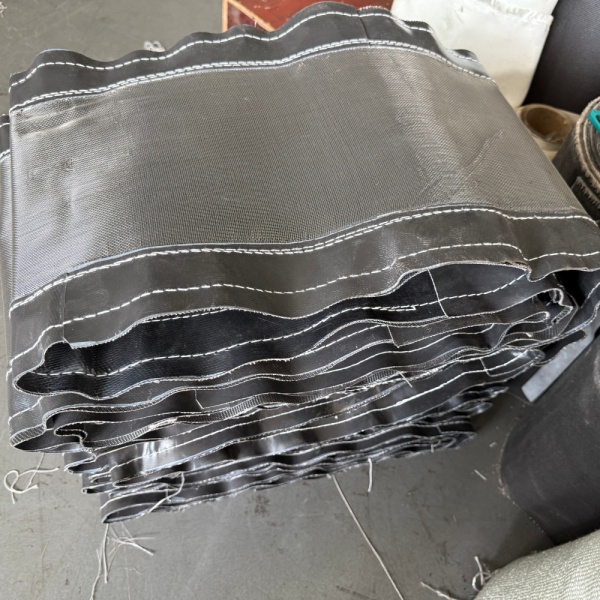
Afabric expansion jointshould be seriously considered when most of the following conditions are present:
This is the typical application envelope for anon metallic expansion joint.
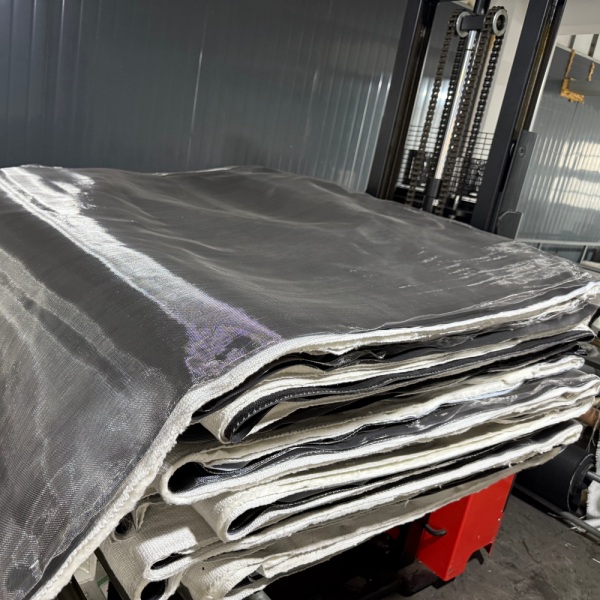
A metallic expansion joint should normally be evaluated first when:
Metallic bellows are engineered pressure-containing components and should be designed around system pressure, temperature, movement, material, fatigue life and piping loads.
Instead of asking, “Which expansion joint is better?” engineers should ask, “Which expansion joint architecture matches this system?”
Use the following sequence.
Is it a large duct or pressurized pipe?
Specify normal pressure, design pressure and whether the system operates under positive or negative pressure.
Provide both continuous operating temperature and maximum excursion temperature.
List axial compression, axial extension, lateral displacement and angular movement individually.
Specify hot air, exhaust gas, flue gas, steam, liquid or process chemical.
Include gas velocity, dust loading, abrasive particles and turbulence.
Determine how much reaction force can safely be transferred to fans, duct supports, equipment nozzles and anchors.
Confirm shape, dimensions, flange arrangement and available face-to-face installation length.
Consider a large rectangular flue-gas duct installed downstream of industrial combustion equipment.
The system has:
In this situation, a fabric expansion joint is often an efficient choice because it can combine large cross-section capability, multidirectional flexibility and low reaction forces.
Now consider a high-pressure steam line operating at elevated temperature.
Although thermal movement still exists, the system requires reliable pressure containment. A metallic bellows engineered for the piping pressure, temperature and movement is generally the appropriate technology.
These examples demonstrate why the operating system must determine the expansion joint type.
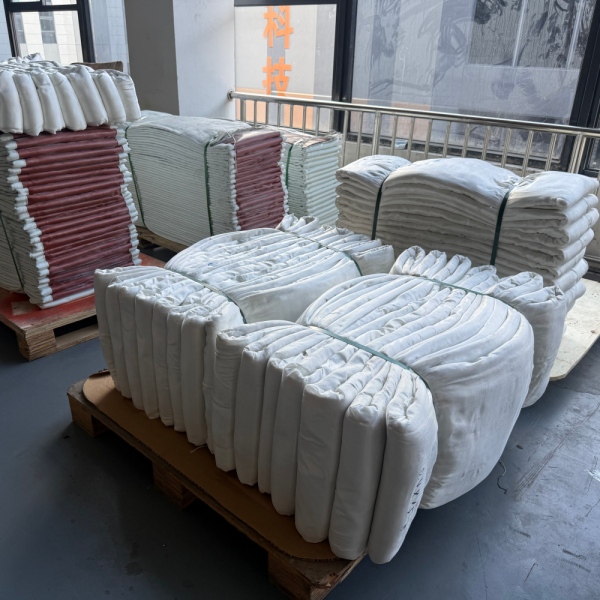
For either metallic or fabric designs, the quality of the engineering recommendation depends heavily on the information supplied.
For a custom fabric joint, BSTFLEX recommends providing:
BSTFLEX manufactures custom non-metallic expansion joints for industrial hot-air, exhaust and flue-gas ducting systems.
Depending on operating conditions, flexible constructions can incorporate technical fabrics, coated fiberglass, PTFE-based sealing layers, high-temperature insulation and protective components.
Round, rectangular and application-specific configurations can be manufactured according to customer drawings and operating data.
See theBSTFLEX 비금속 직물 신축 이음쇠맞춤형 제조 옵션에 대해.
뜨거운 공기, 배기가스 또는 연도 가스를 운반하는 대형 산업용 덕트를 사용하는 애플리케이션의 경우, BSTFLEX에 도면과 작동 조건을 보내주시면 검토해 드리겠습니다.
덕트 치수, 온도, 압력, 매체, 축 방향 움직임, 횡 방향 움직임, 면간 거리 및 수량을 포함하십시오.

 English
 français
 Deutsch
 русский
 italiano
 español
 português
 Nederlands
 العربية
 日本語
日本語 Türkçe
 Polski
 Tiếng Việt
 slovenský
 Indonesia