English
 français
 Deutsch
 русский
 italiano
 español
 português
 Nederlands
 العربية
 日本語
 Türkçe
 Polski
 Tiếng Việt
 slovenský
 Indonesia



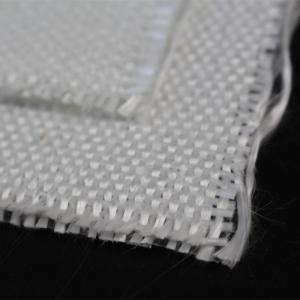
An endless picture frame tadpole gasket is a finished closed-loop sealing assembly manufactured to follow a rectangular, square, circular or application-specific equipment perimeter. Instead of supplying only straight tadpole gasket lengths for field cutting and joining, the profile is fabricated into a complete frame according to the customer’s dimensions and mounting orientation.
The closed frame can help an OEM or maintenance team control bulb position, corner geometry and overall fit before installation. However, the words “endless frame” do not by themselves define the dimensions, materials, core, corner construction or joint location.
A complete specification must identify the frame datum, bulb profile, mounting tail, cover material, core construction, corner geometry, compression space and operating conditions.
BSTFLEX manufactures custom tadpole gaskets and high temperature tadpole seals for industrial ovens, furnaces, kilns, thermal enclosures and OEM equipment. Closed-frame profiles can be developed from customer drawings, equipment measurements or approved samples.
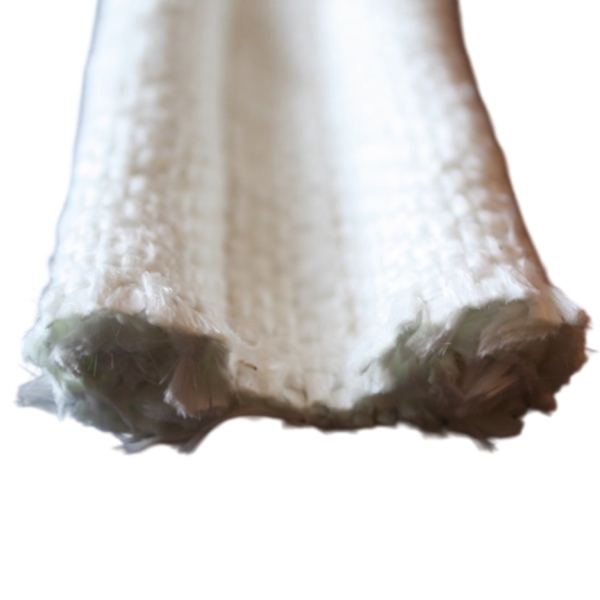
What Is an Endless Picture Frame Tadpole Gasket?
A standard linear tadpole gasket is normally supplied as a straight length or continuous roll. The installer cuts the material and determines how the corners and ends will meet.
An endless picture frame gasket is supplied as a completed closed profile. For a rectangular assembly, it typically includes four straight sections and four corners arranged according to the equipment opening.
The completed frame may be produced for:
- Rectangular oven doors
- Square furnace access panels
- Thermal chamber doors
- Kiln inspection openings
- Boiler access covers
- Duct access panels
- Custom OEM enclosures
- Round, oval or irregular equipment openings
Endless Does Not Necessarily Mean Seamless
In this product category, “endless” generally describes the finished closed form of the gasket. It should not automatically be interpreted as a completely joint-free textile construction.
Depending on the profile, materials and manufacturing method, the frame may contain one or more engineered closing points, sewn joints or fabricated corner transitions.
For procurement purposes, confirm:
- How the frame is closed
- Where the closing joint is located
- Whether the bulb continues through the joint
- How the cover is finished at the joint
- Whether the joint sits on a straight section or near a corner
- Whether the joint position must be controlled on the drawing
Do not describe the product as seamless unless the actual approved manufacturing construction supports that claim.
Endless Frame, Ring Form and Linear Tadpole Gasket
| Configuration | Typical Form | Primary Specification Requirement |
|---|---|---|
| Linear Tadpole Gasket | Straight cut length or continuous material | Profile dimensions, total length and field joining method |
| Endless Picture Frame | Rectangular or square closed frame with defined corners | Frame dimensions, datum, corner construction and profile orientation |
| Ring Form Tadpole Gasket | Round or oval closed loop | Inside diameter, outside diameter or bulb-centerline diameter |
| Custom Contour Frame | Non-standard closed geometry | Full-scale drawing, CAD geometry or verified dimensional layout |
The terms should not be used interchangeably without a drawing. A rectangular picture frame and a circular ring form may use the same cover and core materials, but they require different geometric specifications.
Choose One Frame Dimension Datum
A frame width and height are incomplete unless the measurement reference is clearly identified.
For example, “800 × 600 mm frame” could describe:
- The clear inside opening
- The outside edge of the gasket
- The bulb centerline
- The inner edge of the bulb
- The outer edge of the mounting tail
- The equipment door dimensions rather than the gasket dimensions
These values are not equivalent.
| Dimension Datum | Meaning | When It Is Useful |
|---|---|---|
| Inside Opening | Clear space enclosed by the gasket frame | Useful where the gasket must not obstruct the equipment opening |
| Outside Frame Dimension | Maximum outside width and height of the complete profile | Useful for checking available mounting space and interference |
| Bulb Centerline | Width and height measured through the center path of the sealing bulb | Useful for defining the sealing path and comparing corner geometry |
| Tail Reference Edge | Frame dimension measured from a defined mounting-tail edge | Useful when the retaining hardware is the primary equipment datum |
| Contact-Line Dimension | Path by the bulb where it contacts the mating surface | Useful for matching an engineered door or panel sealing track |
The drawing should show the selected datum with arrows and reference points. Do not ask the manufacturer to infer the intended frame size from the equipment opening alone.
Specify the Tadpole Profile Separately from the Frame Size
Frame dimensions define the overall geometry. The tadpole cross-section defines how the frame seals and mounts.
The cross-sectional drawing should include:
- Free bulb height
- Bulb width
- Bulb diameter where the section is round
- Tail width
- Tail thickness
- Overall profile width
- Stitch location
- Bulb orientation
- Tail orientation
- Closing direction
For replacement work, use the Tadpole Gasket Replacement Measurement Guide to record the bulb, tail, overall width, installed gap and perimeter dimensions.
Bulb Orientation Must Be Shown on the Drawing
A finished frame can be manufactured with the bulb positioned toward the inside opening, toward the outside perimeter or along another application-specific contact line.
The tail may also extend:
- Inward toward the opening
- Outward away from the opening
- Toward the hot side
- Toward the cold side
- Behind a retaining strip
- Into a formed mounting channel
A frame with the correct width and height can still be unusable if the bulb or tail faces the wrong direction.
Show the hot side, cold side, door side, frame side and closing direction on the drawing whenever orientation is important.
Corner Construction Requires Separate Review
Corners are one of the main reasons to specify a preformed picture frame instead of supplying only straight lengths.
At a 90-degree corner, the inner and outer paths of the textile are different lengths. The bulb and mounting tail must transition around the corner without excessive bunching, stretching, twisting or displacement.
The appropriate corner construction depends on:
- Bulb diameter
- Tail width
- Cover material
- Core material
- Core density
- Inside corner radius
- Outside clearance
- Profile orientation
- Required frame tolerance
Square Corners
A square equipment opening does not automatically require a sharp, zero-radius textile corner. The gasket may need a small internal radius or a fabricated transition to prevent distortion.
The drawing should state whether the equipment requires:
- A visually square outside frame
- A defined inside corner radius
- A defined bulb-centerline radius
- A mitered or fabricated transition
- A corner matched to an existing OEM sample
Radiused Corners
A radiused corner can reduce the severity of the direction change, but the correct radius still depends on the profile size and material construction.
Provide the radius reference clearly. An inside radius, outside radius and bulb-centerline radius are different dimensions.
Corner Acceptance
During sample approval, inspect:
- Bulb continuity through the corner
- Bulb position relative to the mating surface
- Tail flatness beneath the retaining hardware
- Cover wrinkling or excessive tension
- Stitch condition
- Corner fit after the door closes
A visually neat corner is not sufficient if the bulb moves away from the required sealing track.
Joint Location Should Be Controlled
Where the manufacturing method requires a closing joint, the customer may need to define an acceptable joint zone.
The joint should be evaluated in relation to:
- Hinge movement
- Latch pressure
- Highest-temperature location
- Direct hot-gas exposure
- Mechanical rubbing
- Retaining-strip breaks
- Inspection access
A joint positioned at the top of one oven door may be acceptable, while another design may require the joint on a low-stress side section.
If the joint location matters, identify it on the drawing instead of allowing it to vary between production batches.
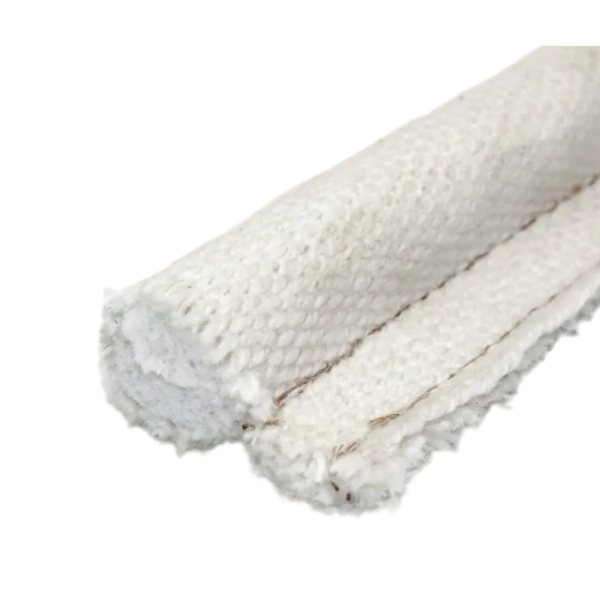
Single Bulb, Double Bulb and Double Tail Frames
An endless frame describes the finished perimeter form. It does not restrict the gasket to one cross-sectional profile.
A custom frame can be developed from:
- Single bulb tadpole gasket
- Double bulb tadpole gasket
- Double tail tadpole gasket
- Hollow bulb profile
- Reinforced bulb profile
- Application-specific custom profile
For a two-bulb design, each bulb path and installed gap must be defined. Review the Double Bulb Tadpole Gasket Design Guide before converting a linear double-bulb profile into a closed frame.
A double tail profile is different from a double bulb profile. The cross-section must clearly show whether the design uses two sealing bulbs or one bulb with two mounting tails.
Cover and Core Materials for Endless Tadpole Frames
The closed-frame geometry can be combined with different cover and core constructions. Material selection should be based on actual temperature, compression, abrasion, process exposure and mechanical requirements.
Fiberglass Cover with Fiberglass Core
A fiber-based construction can be considered where flexible non-metallic compression is required and the verified service conditions are suitable.
Review the Fiberglass Cover Fiberglass Core Tadpole Gasket as a material-and-core reference.
Fiberglass Cover with Stainless Steel Core
A stainless steel core provides internal metallic support and a different compression response from a fiber core.
Review the Fiberglass Cover Stainless Steel Core Tadpole Gasket where reinforced internal construction is required.
Fiberglass Cover with Hollow Stainless Steel Core
A hollow metallic core provides an open-center internal structure. It can be evaluated where the gasket requires useful deformation within the available closing force.
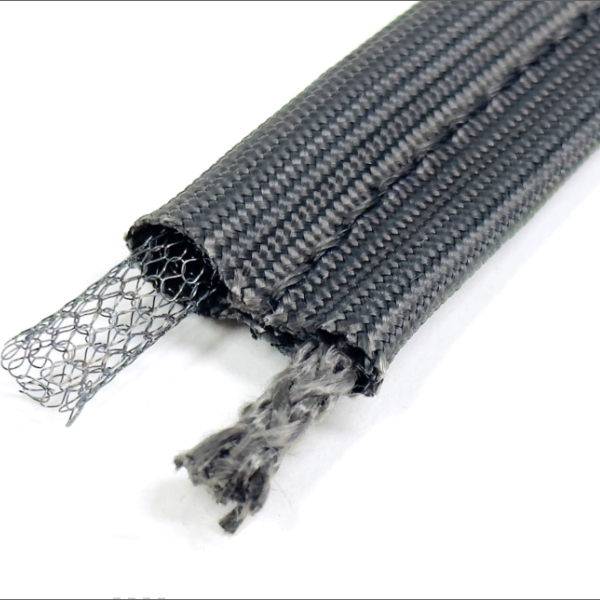
Review the Fiberglass Cover Stainless Steel Hollow Core Tadpole Gasket .
Silica Cover with Inconel Core
For more demanding thermal applications requiring a high-temperature textile and internal metallic support, the frame can be evaluated using a silica-and-Inconel construction.
See the Silica Cloth Cover Inconel Core Tadpole Gasket .
Ceramic Fabric with Ceramic Core
A ceramic textile and ceramic core combination can be considered for demanding thermal equipment requiring a non-metallic high-temperature internal construction.
See the Ceramic Fabric Cover Ceramic Core Tadpole Gasket .
These product pages provide material references. The final closed-frame geometry, corners and joint construction still require a separate drawing and approval.
Compression Must Be Checked Around the Entire Frame
A rectangular gasket frame can experience different installed gaps at the hinge side, latch side, top, bottom and corners.
Record the minimum and maximum closed gap around the complete perimeter. Do not select the bulb only from an average value.
If the free bulb height and installed height are known, nominal dimensional compression can be calculated as:
Compression (%) = (Free Bulb Height - Installed Bulb Height) / Free Bulb Height × 100
This calculation describes geometric reduction only. It does not establish the required closing force or prove that the selected compression is acceptable for the cover and core.
During sample approval, evaluate:
- Door closing effort
- Bulb contact on all four sides
- Compression at each corner
- Bulb recovery after opening
- Tail retention
- Frame movement during operation
Do Not Use an Oversized Frame to Compensate for Door Distortion
A preformed gasket frame cannot correct every equipment problem.
Before increasing the bulb size or changing the frame dimensions, inspect:
- Door alignment
- Hinge condition
- Latch adjustment
- Frame flatness
- Retaining-strip condition
- Sharp edges
- Thermal distortion
- Local hot-gas leakage
A larger bulb may increase closing force and create excessive compression at the tightest part of the frame.
Endless Picture Frame vs Field-Joined Linear Gasket
| Consideration | Preformed Endless Frame | Field-Joined Linear Gasket |
|---|---|---|
| Corner Geometry | Established during manufacturing and sample approval | Determined by the installer during installation |
| Profile Orientation | Fixed in the finished frame | Must be maintained during field routing |
| Finished Size | Manufactured to an approved dimensional reference | Depends on field measurement, cutting and joining |
| Installation Time | Can reduce field cutting and corner-forming work | Requires the installer to form and finish the perimeter |
| Replacement Flexibility | Equipment-specific finished assembly | Continuous stock may be adapted to multiple sizes |
| Procurement Requirement | Detailed frame drawing and orientation are required | Profile dimensions and total length may be sufficient |
The correct choice depends on equipment design, installation capability, quantity and required dimensional control.
Replacement Endless Tadpole Gasket Frames
For an existing frame, do not rely only on the dimensions of the removed gasket. The old frame may be stretched, permanently compressed or distorted.
Provide:
- Existing frame sample
- Cross-sectional profile sample
- Equipment opening dimensions
- Bulb contact-line dimensions
- Retaining-strip dimensions
- Corner radii
- Joint location
- Cold closed-gap measurements
- Operating temperature
- Photographs showing installed orientation
Label every dimension according to its source:
- Original OEM drawing
- Unused spare gasket
- Worn gasket sample
- Equipment measurement
- Estimated or unconfirmed value
OEM Development Process
BSTFLEX supports drawing-based development through its Custom Tadpole Gasket Manufacturing service.
A typical development sequence can include:
- Application and temperature review
- Cross-sectional profile confirmation
- Frame datum and overall geometry confirmation
- Bulb and tail orientation review
- Cover and core material selection
- Corner and joint construction review
- Prototype frame manufacturing
- Customer fit and compression evaluation
- Drawing or sample approval
- Batch production
Production should be based on an approved drawing, approved sample or agreed master reference rather than an informal frame-size description.
Prototype Inspection and Acceptance
Before approving the frame for production, inspect the prototype against the drawing and equipment.
| Inspection Item | Acceptance Question |
|---|---|
| Frame Dimensions | Do the inside, outside or centerline dimensions match the approved datum? |
| Profile Orientation | Does the bulb and tail face the correct direction on all four sides? |
| Corner Geometry | Do the corners match the required radius and sealing path? |
| Joint Location | Is the closure joint in the approved area and correctly finished? |
| Twist | Does the profile remain correctly oriented without rolling or twisting? |
| Cover and Stitching | Are the textile cover, seams and stitch lines consistent with the approved construction? |
| Mounting Fit | Does the tail fit beneath the retaining hardware without moving the bulb? |
| Compression | Does the door close correctly while maintaining contact around the complete perimeter? |
Where the equipment has a defined leakage, thermal-efficiency or process-containment requirement, perform the applicable system test. Visual contact alone does not prove gas-tight or pressure-rated performance.
Applications for Endless Picture Frame Tadpole Gaskets
Custom closed-frame tadpole gaskets can be considered for:
- Industrial batch oven doors
- Powder coating oven doors
- Walk-in oven access doors
- Heat-treatment furnace doors
- Kiln access panels
- Boiler inspection doors
- Thermal chamber doors
- Duct access covers
- Pollution-control equipment panels
- High-temperature enclosures
- OEM heating equipment
For industrial oven material and core selection, review the Industrial Oven Door Tadpole Gasket Guide .
RFQ Checklist for an Endless Tadpole Gasket Frame
| RFQ Item | Information Required |
|---|---|
| Frame Shape | Rectangle, square, round, oval or custom contour |
| Dimension Datum | Inside, outside, bulb centerline, contact line or tail reference |
| Frame Dimensions | Width, height, diameter, radii and any non-standard geometry |
| Tadpole Profile | Bulb height, bulb width, tail width, tail thickness and overall width |
| Orientation | Bulb direction, tail direction, hot side and mounting side |
| Corners | Square, radiused, mitered or matched to an existing sample |
| Joint | Permitted joint area and any special finishing requirement |
| Cover Material | Fiberglass, silica, ceramic, coated fabric or other specified material |
| Core | Fiberglass, rope, ceramic, stainless steel, hollow mesh, Inconel or unknown |
| Installed Gap | Minimum and maximum closed gap around the perimeter |
| Temperature | Continuous and peak temperature at the gasket location |
| Quantity | Prototype quantity and expected production volume |
| Reference | CAD drawing, dimensioned sketch, equipment photographs or existing frame |
Frequently Asked Questions
Is an endless tadpole gasket completely seamless?
Not necessarily. “Endless” normally describes the finished closed-loop form. The manufacturing construction may include an engineered closing seam or joint. Confirm the actual design before describing the frame as seamless.
Should I specify inside or outside frame dimensions?
Either can be used if the reference is clearly identified. Bulb-centerline dimensions are also useful. The drawing should show the measurement datum rather than providing an unlabelled width and height.
Can an endless frame use a double bulb profile?
Yes, a custom closed frame can be developed from a double-bulb profile when the equipment provides two supported contact tracks. Both bulb paths, spacing, corners and installed gaps must be defined.
Can BSTFLEX reproduce an existing picture frame gasket?
Yes. An existing frame, profile sample, equipment drawing and installed dimensions can be used for replacement development. A worn frame should be supplemented with actual equipment measurements.
Can the frame be round or oval?
Yes. Closed-loop tadpole gaskets can be developed in rectangular, round, oval or custom contours, subject to the profile, material, bending geometry and manufacturing review.
What materials are available?
Available constructions can include fiberglass, silica, ceramic and coated textile covers with fiber, rope, stainless steel, hollow mesh, ceramic or Inconel core options. Final selection depends on the complete operating environment.
Can the frame be supplied for OEM production?
Yes. After sample and drawing approval, custom frame profiles can be manufactured for batch and repeat OEM supply.
Request a Custom Endless Picture Frame Tadpole Gasket
BSTFLEX manufactures endless picture frame tadpole gaskets, closed-loop tadpole seals and custom formed gasket profiles for OEM equipment and industrial replacement projects.
Send the complete frame drawing together with the cross-sectional profile, bulb orientation, corner geometry, material requirements, installed gap, operating temperature and required quantity.
For replacement projects, include photographs and an existing gasket sample where available, but also provide the actual equipment dimensions because a used frame may already be stretched or permanently compressed.
Contact BSTFLEX for a custom endless picture frame tadpole gasket quotation.